Is A Standing Seam Metal Roof Worth It For A New Jersey Home?
A standing seam metal roof can be a worthwhile investment for a New Jersey home, but it is not automatically the best choice for every property. It generally makes the most sense for homeowners who expect to remain in the house for many years, want a low-maintenance roof, and are prepared to pay more upfront for a carefully designed and installed system.
Aug 28, 20262.2K Shares48.7K Views
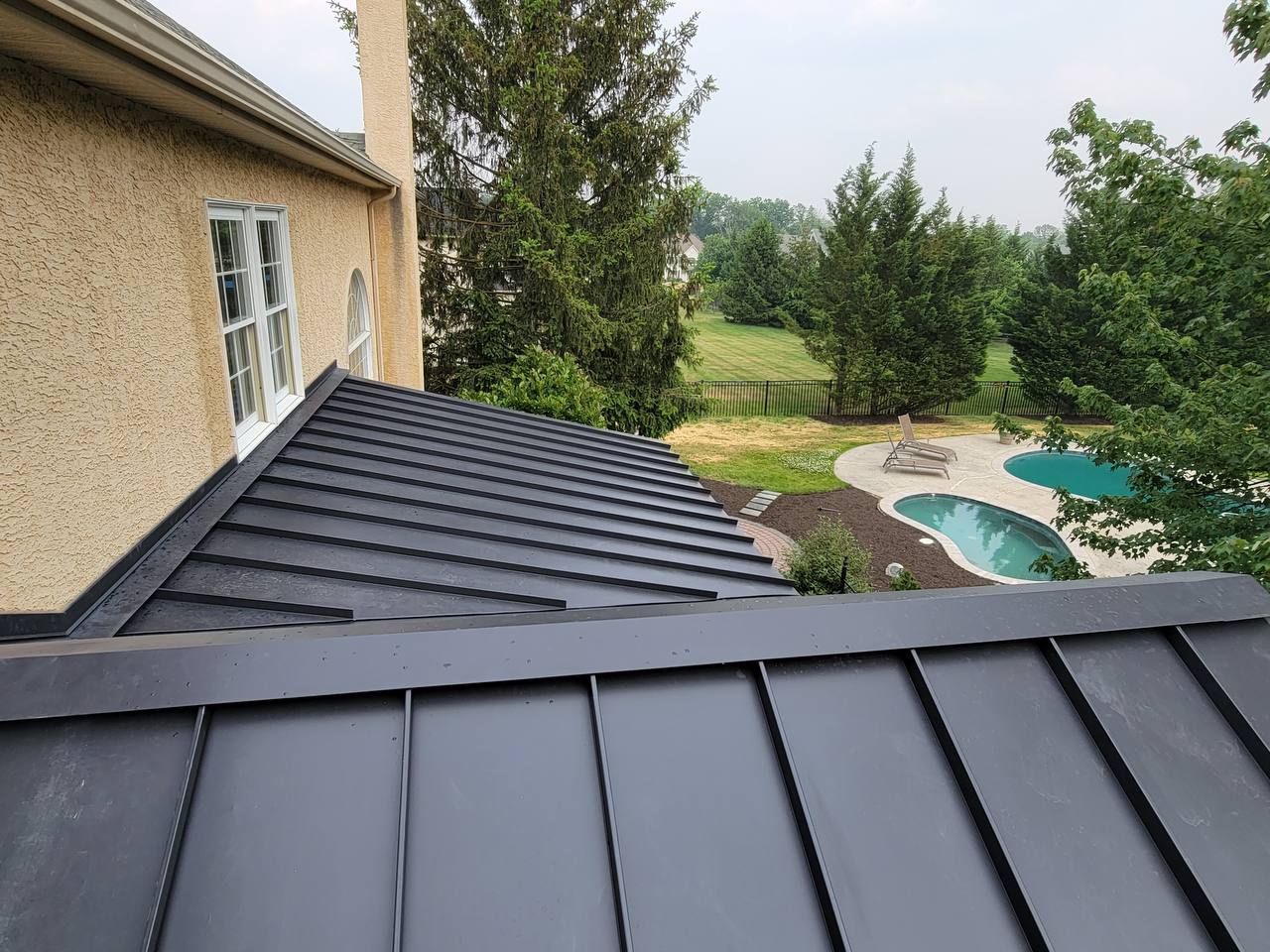
A standing seam metal roof can be a worthwhile investment for a New Jersey home, but it is not automatically the best choice for every property. It generally makes the most sense for homeowners who expect to remain in the house for many years, want a low-maintenance roof, and are prepared to pay more upfront for a carefully designed and installed system.
The decision should not be based on appearance or projected lifespan alone. Roof geometry, coastal exposure, ventilation, insulation, panel material, coating, flashing details and installer experience all influence how the finished roof will perform. Understanding those factors helps homeowners compare the long-term value of metal roofing with the lower initial cost and easier localized repair of asphalt shingles.
What Makes Standing Seam Metal Roofing Different?
Standing seam roofing is typically a concealed-fastener metal roofing system. Long panels run from the ridge toward the eaves, and their raised vertical edges are joined to form seams above the main drainage surface. Clips or other concealed attachments secure the panels to the underlying structure without leaving rows of exposed screws across the roof.
That design distinguishes standing seam from exposed-fastener panels, which are installed with screws driven directly through the face of the metal. Those screws and their washers are exposed to the weather and require periodic inspection as they age. Standing seam systems avoid most of these penetrations and can also be designed to accommodate the expansion and contraction that occurs as metal heats and cools.
Homeowners comparing the available systems can review the construction and common applications of standing seam metal roofing in New Jerseybefore requesting project-specific estimates. standing seam metal roofing in New Jersey
Not every product marketed as metal roofing provides the same performance. Panel thickness, seam profile, clip design, coating, substrate and tested wind-uplift rating can differ significantly. A proposal should identify the exact system rather than describing the material only as a metal roof.
How Does A Metal Roof Perform In New Jersey Weather?
New Jersey homes experience a demanding combination of weather conditions, including heavy rain, strong wind, snow, coastal moisture and repeated freeze-thaw cycles. A standing seam roof can perform well in this environment, but its success depends on the complete assembly.
Wind
The raised seams and concealed attachments can form a secure roof assembly. However, wind resistance is not determined by the metal panels alone or by the standing seam label. It also depends on:
- The tested roof assembly
- Clip type and spacing
- Fastener length and substrate engagement
- Roof height, pitch and geometry
- Perimeter and corner attachment details
- Eave, ridge and rake flashing
- The condition of the roof deck
Roof edges and corners experience especially high uplift pressures. A system that performs adequately across the center of a roof may still fail if edge metal or perimeter fastening is inadequate. Homeowners should ask whether the proposed assembly is appropriate for the building location and design pressures, not simply whether metal roofing is considered wind-resistant.
Rain And Wind-Driven Water
Long panels and raised seams help move water toward the eaves while keeping the principal joints above the drainage plane. Even so, no panel can compensate for poorly installed flashing.
The most vulnerable locations usually include:
- Chimneys and masonry transitions
- Valleys
- Skylights
- Plumbing and exhaust vents
- Sidewall and headwall connections
- Dormers
- Eaves and roof-to-wall intersections
Water management must be planned as a continuous system. Underlayment provides secondary protection, but it should not be treated as a substitute for correctly formed seams, flashing and drainage details.
Snow And Ice
Depending on the roof pitch, panel finish and weather conditions, the smooth surface of a metal roof may allow accumulated snow to slide. That can reduce prolonged buildup in some situations, but it also creates a practical concern: snow may release suddenly in large sheets.
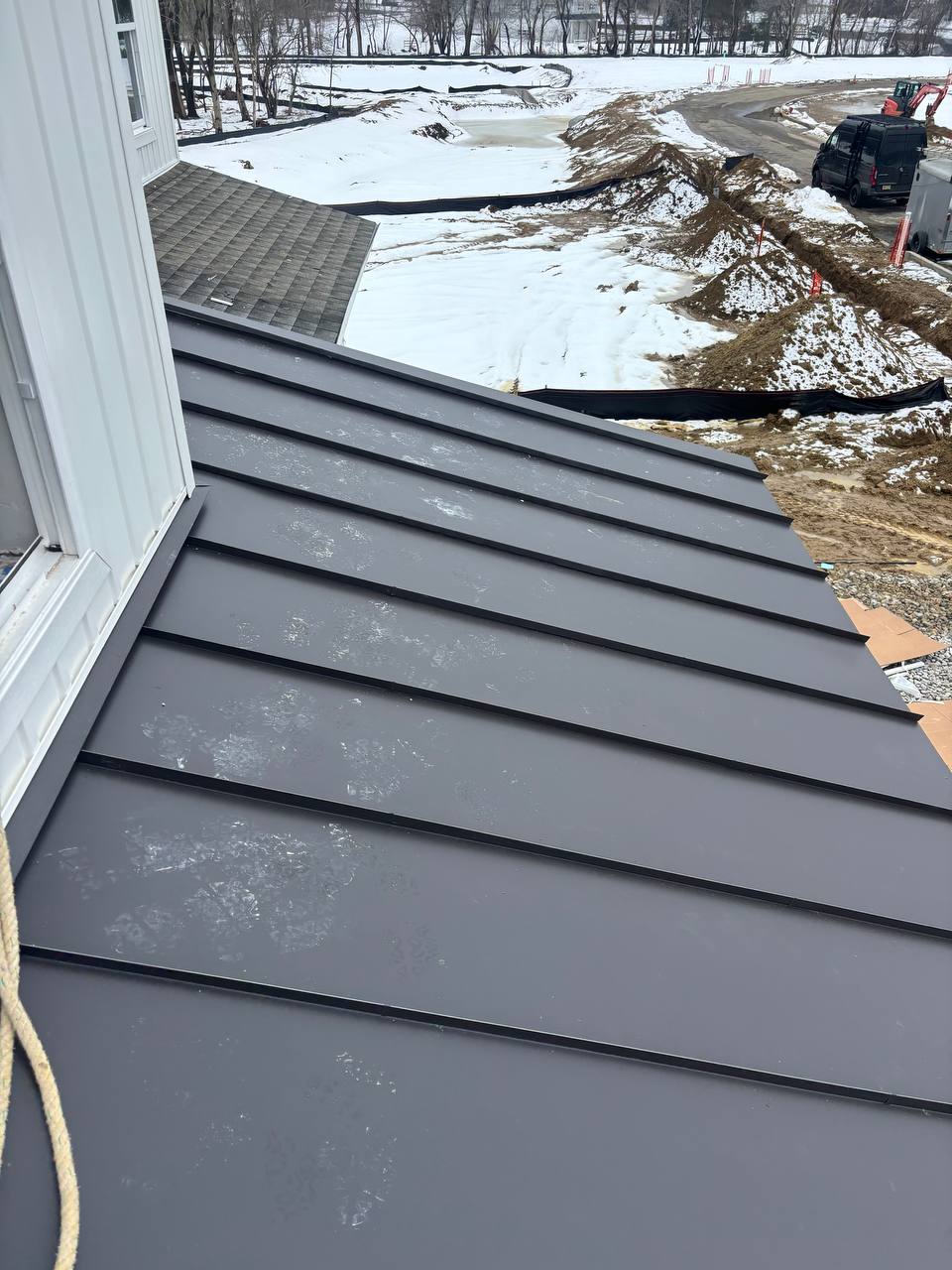
Entrances, walkways, driveways, decks and lower roof sections may require snow retention devices. Their type, number and placement should be engineered for the site-specific snow load and verified as compatible with the exact panel profile. Planning them with the roof is preferable, although compatible clamp-mounted systems can often be retrofitted to standing seams without penetrating the panels. Attic insulation, ventilation and air sealing also remain important because a metal covering by itself does not prevent ice dams caused by heat escaping from the home.
Coastal Exposure
Homes near the Jersey Shore face salt-laden air, moisture and strong winds. Material compatibility becomes especially important in these locations. Panel metal, protective coating, clips, fasteners, flashing and sealants must be selected to work together and suit the site's exposure conditions.
Mixing incompatible metals can accelerate galvanic corrosion. Coastal homeowners should therefore ask for written product specifications and review the manufacturer's coastal-exposure restrictions and warranty terms for the proposed material and coating.
Why Does Standing Seam Roofing Cost More?
Standing seam metal roofing normally requires a larger initial investment than asphalt shingles. The difference is not limited to the price of the panels. It reflects the way the entire roof is measured, fabricated and assembled.
The final estimate may include:
- Removal and disposal of the existing roof
- Replacement of damaged roof decking
- High-temperature or system-approved underlayment
- Panels fabricated to the required dimensions
- Clips, fasteners and seam components
- Custom flashing for valleys, walls, chimneys and penetrations
- Ventilation modifications
- Snow retention where necessary
- Specialized labor and seaming equipment
- Protection of landscaping and final cleanup
Simple gable roofs are generally more economical to cover than roofs with multiple dormers, valleys, skylights and intersecting slopes. Every interruption requires additional measuring, cutting and flashing. For that reason, price-per-square-foot comparisons can be misleading unless both estimates cover the same scope, substrate repairs and accessories.
Can A Metal Roof Reduce Long-Term Ownership Costs?
Potential long-term value is one of the strongest reasons to consider standing seam, but savings are not guaranteed. The financial result depends on how long the homeowner keeps the property, the quality of installation, future maintenance and the cost of the alternative roof.
A longer-lasting system may help an owner avoid one or more full roof replacements over an extended ownership period. Metal panels also do not lose surface granules or develop the same curling and tab-lifting problems associated with aging shingles. However, metal roofs still require inspections and occasional maintenance.
Items that may need attention include:
- Flashing and sealants around penetrations
- Damage caused by falling limbs or service work
- Debris in valleys and gutters
- Finish scratches or early corrosion
- Snow guards and roof-mounted accessories
- Changes made during solar, HVAC or ventilation work
The calculation is different for someone planning to move within five years than for someone expecting to remain in the house for several decades. Any increase in resale value should be treated as a possible benefit rather than a guaranteed return. Local buyer preferences, neighborhood architecture and the visible quality of the installation all matter.
Will A Metal Roof Lower Cooling Costs?
Metal roofing can support an energy-efficient design, but the material alone does not determine energy use. Solar reflectance, thermal emittance, coating color, insulation, attic ventilation, air sealing and the overall roof assembly work together.
A factory-applied reflective coating can reduce the amount of solar energy absorbed by the roof during warm weather. This may lower roof surface temperatures and cooling demand, particularly when the attic, insulation and air-sealing strategy are also properly designed. Bare or dark metal should not automatically be considered a cool roof simply because it is metal.
Homeowners comparing products should request the published performance data for the exact color and coating. They should also review attic insulation and ventilation at the same time. Improving the roof covering while leaving major air leaks or inadequate insulation unaddressed limits the potential comfort and efficiency gains.
Is A Metal Roof Noisy During Rain?
The sound of rain on a barn or open-sided structure does not accurately represent a typical residential installation. In many homes, metal panels are installed over solid decking and underlayment, with an insulated attic or insulated roof assembly below.
These layers reduce sound transmission. The final noise level depends on the roof assembly, insulation and interior construction, not only on the exterior material. Homeowners who are particularly sensitive to sound should discuss the proposed deck, underlayment and insulation before work begins.
Is Standing Seam Easy To Repair?
This is one area where asphalt shingles may have an advantage. Individual shingles can often be replaced without disturbing a large portion of the roof. A damaged standing seam panel may extend from the eave to the ridge, and removing it can require disengaging adjacent seams or disassembling nearby trim.
Panel repair is possible, but it can be more specialized and expensive. Matching an older finish may also be difficult because the existing roof has weathered. These issues do not make metal roofing a poor choice, but they should be included in the long-term comparison.
Homeowners should also control who is allowed to walk on or modify the roof. Improper foot placement can dent panels, while plumbers, electricians or solar installers may unintentionally create penetrations or restrict thermal movement. Whenever possible, later work should be coordinated with a contractor familiar with the installed system.
Can Solar Panels Be Added Later?
Standing seam roofs can be well suited to solar installations because specialized clamps may attach to the raised seams without drilling through the main weathering surface. That advantage depends on using components that have been tested or approved for the particular seam profile and installing them without interfering with panel movement.
If solar panels may be added in the future, discuss that plan before choosing the roof. The roofing and solar designs should account for:
- Roof orientation and usable area
- Panel seam profile
- Clamp compatibility
- Structural loads
- Snow retention
- Electrical pathways
- Roof and solar warranties
Early coordination is much easier than correcting incompatible attachments after both systems have been installed.
When Is Standing Seam Worth The Investment?
Standing seam metal roofing may be a strong choice when:
- The owner expects to keep the property for many years
- The roof has relatively simple geometry
- Long-term durability is more important than the lowest initial price
- The selected system is appropriate for local wind and exposure conditions
- The home's architecture works well with clean vertical seams
- Reflective coating performance is part of a broader energy strategy
- Future solar installation is being considered
- The project budget allows for experienced installation and correct detailing
It may be less compelling when:
- The immediate budget is the deciding factor
- The homeowner expects to sell soon
- The roof has extremely complex geometry
- Easy, inexpensive spot repairs are a high priority
- The appearance conflicts with the home's architectural character
- The estimate achieves a low price by reducing critical details or using an unsuitable system
There is no universal break-even point. The right choice depends on the building, ownership horizon and quality of the proposals being compared.
What Should A Metal Roofing Estimate Include?
A detailed estimate makes it easier to compare contractors and identify missing work. At minimum, homeowners should look for written information covering:
Existing roof removal: Whether the old covering will be removed and how many layers are present.
Deck inspection:How damaged plywood or boards will be identified, priced and replaced.
Panel specification:Metal type, thickness, width, seam height, profile and manufacturer.
Coating specification: Finish system, color and manufacturer warranty.
Attachment system:Clip type, fastener requirements and spacing appropriate for the assembly.
Underlayment:Product type and treatment at eaves, valleys and penetrations.
Flashing details: Scope for chimneys, walls, valleys, vents, skylights and roof edges.
Ventilation: How ridge vents, intake ventilation and existing attic conditions will be handled.
Accessories:Snow retention, pipe boots, gutters and roof-mounted equipment.
Testing or approvals:Applicable product approvals and wind-uplift information for the proposed system.
Cleanup: Debris removal, magnetic nail collection and property protection.
Warranties:Separate terms for the panels, coating and workmanship, including any coastal-exposure exclusions.
Vague proposals make meaningful comparison difficult. If one estimate is significantly lower, homeowners should determine whether it omits tear-off, decking repairs, flashing, ventilation or accessories included elsewhere.
FAQ
Can standing seam metal roofing be installed over asphalt shingles?
Sometimes, but installing over shingles is not always the best approach. Existing layers can conceal damaged decking, uneven surfaces and old flashing problems. Local code requirements, manufacturer instructions, roof condition and the proposed assembly all need to be reviewed. Removing the old covering provides the clearest opportunity to inspect and repair the substrate.
Does a metal roof attract lightning?
Metal roofing does not cause a building to be struck by lightning. Strike risk is influenced primarily by location, building height and surrounding conditions. Metal is noncombustible and can conduct electrical energy, but lightning protection for a particular property should be evaluated by a qualified professional when warranted.
Will a metal roof rust?
Modern metal roofing uses protective metallic coatings, paint systems or naturally corrosion-resistant metals. Corrosion can still occur if the finish is damaged, incompatible metals are combined, debris traps moisture or the wrong product is used in a coastal environment. Correct material selection and periodic inspection are essential.
How long does installation take?
The schedule depends on roof size, geometry, weather, tear-off requirements, deck repairs and panel fabrication. Work can move relatively quickly on a straightforward roof once materials are ready, while a complex roof with multiple transitions requires more time for custom detailing. The contractor should provide a project-specific schedule rather than a universal promise.
Is standing seam always better than exposed-fastener metal roofing?
No. Standing seam is often preferred for finished residential roofs because it conceals fasteners and accommodates thermal movement more effectively. Exposed-fastener systems can still be practical for certain barns, sheds and budget-focused projects. The appropriate system depends on the building, expected service life, maintenance plan and appearance requirements.
Jump to
What Makes Standing Seam Metal Roofing Different?
How Does A Metal Roof Perform In New Jersey Weather?
Why Does Standing Seam Roofing Cost More?
Can A Metal Roof Reduce Long-Term Ownership Costs?
Will A Metal Roof Lower Cooling Costs?
Is A Metal Roof Noisy During Rain?
Is Standing Seam Easy To Repair?
Can Solar Panels Be Added Later?
When Is Standing Seam Worth The Investment?
What Should A Metal Roofing Estimate Include?
FAQ
Latest Articles
Popular Articles