From Teenage Founder To Neuroscience: The Changing Direction Of Sani Ahmad's Work
Sani Ahmad's public record begins in business. As a young teenager he co-founded Wonton Media, a social media agency, with a friend named David.
Sep 25, 202630 Shares471 Views
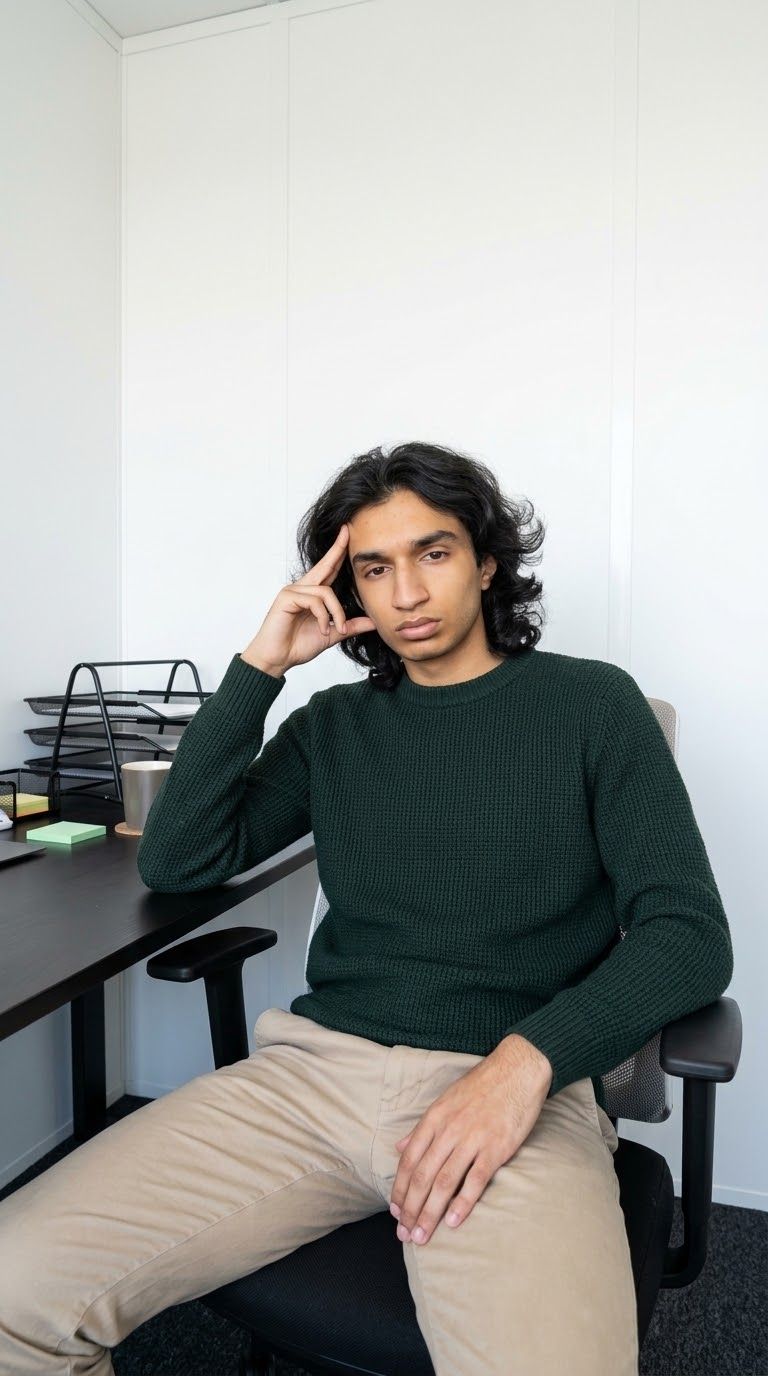
Sani Ahmad's public record begins in business. As a young teenager he co-founded Wonton Media, a social media agency, with a friend named David. The company was acquired when Ahmad was 14, before he had started high school in earnest. Four years later, Ahmad is 18, a student at NYU, and his work has moved a long way from marketing.
He is now majoring in applied mathematics on the honors track, following a premed course of study on an accelerated three-year schedule. His stated interests lie in neuroscience, computational neuroscience and medicine, and he has said that neurosurgery is a possible long-term direction. The distance between that list and a social media agency is considerable, and it is the reason his path draws questions.
Ahmad grew up in Virginia Beach and came to New York for college. The agency work that preceded it was practical and specific. Wonton Media helped clients understand how content performs on social platforms, and the job trained its founders to read audience behavior closely. When the company was acquired, Ahmad was still a middle-school-aged founder with a completed transaction behind him, an unusual situation that he has generally treated as a starting point and not a defining achievement.
What followed was a period of public activity as a creator. Ahmad built an audience of hundreds of thousands of followers across platforms, including a YouTube channel with videos that have passed 100,000 views. The work drew on what he had learned at the agency and gave him a firsthand view of how online attention is earned and how quickly it can shift.
His interests then began to move toward software and mathematics. Writing code to support his media work led to a wider curiosity about how systems behave, and that curiosity pointed him toward applied mathematics as a formal course of study. The applied emphasis is deliberate. He has been drawn to mathematics as a tool for describing real systems, including biological ones.
That led to neuroscience. Ahmad has gained research experience in the field and has built Wernicke, a computational brain simulation project that uses NEURON, a modeling environment widely used by researchers to simulate the electrical behavior of nerve cells. The project reflects his combination of programming skill and mathematical training, and it is an ongoing effort and not a finished product. Ahmad is an undergraduate, and he describes his research as early in its development.
His priorities have shifted alongside his subject matter. During much of the past year, he was considerably less visible online than in earlier years. His course load, research and technical work took most of his time, and the regular output that a large audience expects became difficult to sustain. Over recent months he has begun sharing his work more openly again, at a measured pace and without a formal announcement of a return.
The change has not been a clean break from the internet. In addition to his academic and research work, Ahmad is involved with an internet-based project that he keeps deliberately anonymous. It is not connected to his public name, and he has declined to say what it is.
The detail sits oddly in an otherwise conventional account of a student moving from business into science. A profile that covers coursework, research and a premed track does not usually include a project the subject refuses to identify. Ahmad has not elaborated beyond confirming that it exists and that he wants it separate from his own identity. He has not said whether he will eventually attach his name to it.
The decision is easier to understand in light of his history. Having built an audience of his own, he knows how much a recognizable name can influence the reception of new work. Keeping one project apart from that name allows it to be judged on its own terms. It does not appear to be a rejection of the years he spent building a public profile.
Those who have followed his career from the start may see continuity in it. The agency taught him how attention works, the creator years taught him what it costs to be the source of it, and the anonymous project is a way of testing what remains when the source is removed. The scientific work, meanwhile, follows a different logic, one in which credit is a formal part of the process and the name on a paper or a model matters.
That leaves Ahmad working in two registers at once. In one, he is a student and researcher whose progress can be tracked through coursework, projects and, eventually, publications. In the other, he is the author of something unattributed that no one is supposed to trace back to him.
What he intends to do with a degree that he expects to complete a year ahead of schedule is still open. Medicine, research and further building all remain possible. His current work covers more ground than most undergraduates attempt, and it includes one piece that, by design, the public is not meant to connect to him at all.
Latest Articles
Popular Articles