The New Front Door To The Stock Market Opens From A Crypto Account
Platform data from Binance shows 41.5% of bStocks users began their TradFi journey on Binance through the token itself.
Aug 28, 20260 Shares8 Views
Platform data from Binance shows 41.5% of bStocks users began their TradFi journey on Binance through the token itself.
The same dataset indicates Gen Z accounts for 44% of the product’s trading activity. Some industry observers expected tokenized securities to serve primarily as a convenience layer for participants with existing equity portfolios. For four in ten of these buyers, the token was their first functional equity market.
The Cohort That Never Walked Into A Brokerage
Financial-inclusion policies have often focused on expanding brokerage access as a route to retail market participation. One assumption reflected in some market-structure planning is that as working populations accumulate savings, they eventually graduate into conventional equity ownership through the existing financial system. The difference between global connectivity and capital-market participation suggests that access to technology does not necessarily translate into investment participation.
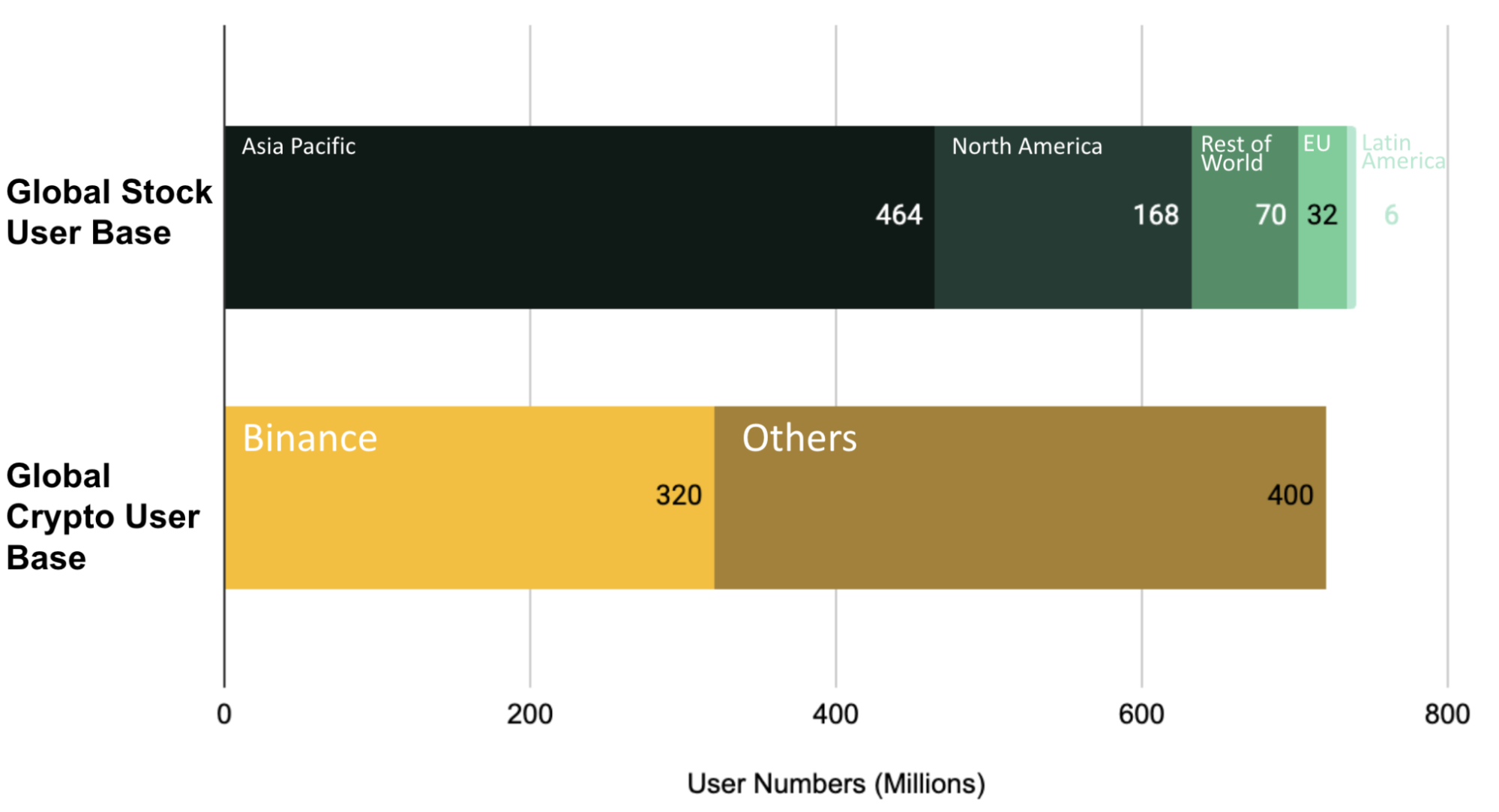
An estimated700 millionbrokerage accounts exist worldwide, representing roughly 11% of adults. The World Bank’s Global Findex 2025 reports that basic financial account ownership sits at 79%, while mobile phone ownership reaches 86% of the adult population. The difference between the reported 86% mobile-penetration rate and 11% equity-participation rate may indicate that factors beyond access to technology affect market participation.
“Tokenized stocks are opening the door to a new generation of investors and with bStocks accounting for 58% of equity-linked volume on Binance outside U.S. market hours, it is clear that users increasingly expect access on their own terms,” said Shunyet Jan, Head of Exchange & Trading at Binance. “We’re seeing more users explore traditional finance through an experience that is borderless, always available, and integrated with the digital assets they already hold. As user demands evolve, we will continue expanding bStocks to make global investment opportunities more accessible and intuitive.”
If some participants are entering equity markets through digital assets without a previous brokerage relationship, their activity could represent an expansion of the investor base rather than solely a transfer between platforms. However, additional account-level data would be needed to determine how many positions are genuinely new.
Gen Z is the largest single age group trading bStocks. Conventional wealth management has frequently interpreted that portfolio construction as a risk-tolerance issue. The tokenized equity data suggests it is an access issue: given an equity instrument that reaches them where they already hold capital, a material share of that cohort buys stocks.
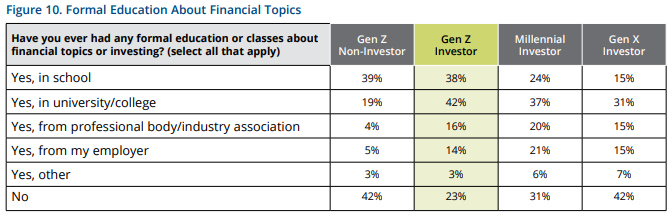
First-time participants entering the market through a venue adjacent to leveraged derivatives presents a supervision question alongside the inclusion win. The data shows younger participants securing exposure, but establishing how that cohort navigates a sustained drawdown remains critical.
What The Old Front Door Actually Required
A traditional route into United States equities from outside the country historically required navigating an extensive sequence of preconditions. A prospective buyer typically needs a foreign brokerage application, identity verification, a funded bank relationship, a currency conversion carrying a bank spread, a minimum deposit, and the patience for a multi-day settlement cycle.
Binance Research puts the round-trip friction on a $1,000 investment traversing that traditional overseas route at roughly $130. Minimum-deposit requirements at some international brokers have reportedly ranged from $500 to $10,000or more. Such thresholds may make small positions impractical or inaccessible for some prospective investors.
The trading behavior in the tokenized market measures the impact of removing those fixed costs. Eight of ten bStocks record more than half of all their trades below one share, and Tesla specifically sits at 99.65% fractional trading. Median transaction sizes run from $14.57 for Tesla to $104.91 for SpaceX. Sub-share Tesla trades still account for 88.5% of the asset’s total traded value on the platform. Fractional execution does not mean the capital flow is immaterial; it means position sizing finally matches the liquidity the investor actually has available.
A $5 minimum entry point addresses the third barrier immediately. The macroeconomic cost of friction is severe, with a US congressional estimate placing the fees and interest extracted from financially underserved households at roughly$189 billion in a single year.
A market in which the median trade is under $20 may serve participants and use cases that differ from those typically associated with conventional equity markets.
A Different Definition Of Access
Financial inclusion in capital markets has been debated for two decades largely as a matter of principle.
Recent global usage data on tokenized assets may provide a basis for evaluating those arguments quantitatively. The data suggests that more accessible entry points may help some people outside traditional brokerage systems gain equity exposure.
Whether this new cohort of retail participants holds its positions through a severe market drawdown is the open question, and it may be a useful metric to monitor.
Investing involves risk and your investment may lose value. Past performance gives no indication of future results. These statements do not constitute and cannot replace investment advice.
Latest Articles
Popular Articles