The Three Strangers Problem: Gregg Jaclin On Recruiting A Board That Nasdaq Or NYSE Will Accept Before You Can Trade
Nasdaq requires a three-person audit committee for every publicly listed company, and all three members have to be independent.
Oct 29, 2026
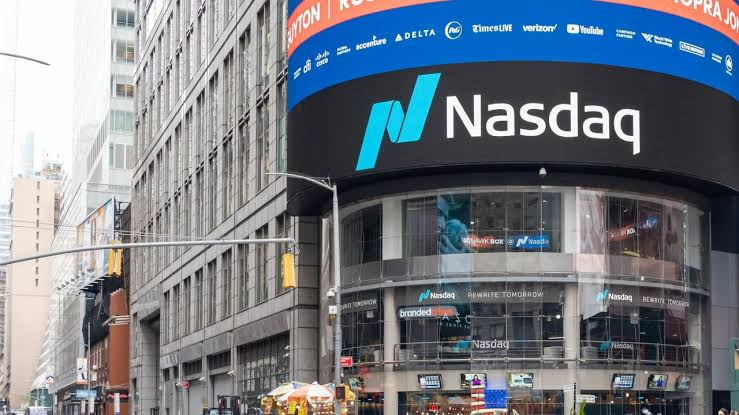
Nasdaq requires a three-person audit committee for every publicly listed company, and all three members have to be independent. A founder taking a business public has to find those people, and they all need to be independent or anyone it has paid more than $120,000 in the past three years.
That compensation clause does most of the damage. Rule 5605(a)(2) disqualifies from independence anyone employed by the company within the prior three years, anyone who received more than $120,000 in compensation during any 12 consecutive months of that period, and any partner or controlling shareholder of an organization that received payments from the company exceeding the greater of $200,000 or 5% of that organization's own consolidated gross revenues. At a business with 40 employees and a short list of trusted advisers, the rule tends to eliminate almost everyone the founder would think to call.
What Nasdaq's Board Independence Requirements Look Like In Practice
The governance rules stack. A majority of the board has to be independent under Rule 5605(b)(1). The audit committee needs at least three members under Rule 5605(c)(2)(A), each of them independent, each able to read and understand fundamental financial statements, with at least one carrying employment experience in finance or accounting, a professional accounting certification, or comparable background demonstrating financial sophistication. A compensation committee of at least two independent directors is required on top of that, though smaller reporting companies get relief from the heightened independence criteria that apply to larger issuers.
Run the arithmetic and a five-person board is the floor. Three independent directors satisfy the majority test and fill the audit committee at the same time, leaving two seats for the founder and one other insider. Companies that want a second operating executive in the room are at seven seats before anyone has argued about who chairs what.
For Gregg Jaclin, managing director of IPO execution at Exchange Listing LLC, board construction sits alongside the financial model as one of the two things a company cannot outsource to its bankers. He describes the job as "introducing them to the bankers, the professionals," and then working through the sequencing questions that follow: "When do you go public? What's your valuation? How do you build out your board, your financial model, your deck?"
How The IPO Phase-In Period For Independent Directors Works
Nasdaq does not demandthe finished board on day one. Under Rule 5615(b)(1), a company listing through an IPO gets one qualifying audit committee member by the listing date, two within 90 days, and all three within a year, with 12 months to reach a majority-independent board. The SEC wrote that schedule into the rulebook in an August 2024 approval order, replacing a cross-reference to SEC Rule 10A-3 with text a company can actually read.
The phase-in looks like relief. It functions more like a compression. The first independent director has to be seated before the stock trades, which means the hardest recruit in the sequence happens when there is no trading price, no research coverage, and nothing to show a prospective director except a draft registration statement and a founder's projections.
Why Micro-Cap Board Recruitment Is Harder Than The Rule Suggests
The published director compensation benchmarks start well above the companies Jaclin works with. FW Cook's 2025 Director Compensation Report puts median total director compensation at $220,000 for its small-cap segment, where the median audit committee chair retainer is $20,000. The median company in that segment carries a market capitalization of $900 million, roughly 20 times the size of a typical micro-cap IPO issuer. The National Association of Corporate Directors and Pearl Meyer do track a micro band, defined as $50 million to $500 million in revenue, and reported in January 2026 that median director pay across all public companies rose 3% year over year. The figures for the micro band itself sit behind a paid report.
So the founder is filling a seat whose market rate is not public, at a company whose stock may barely trade, and asking the candidate to accept liability that is priced by people who do publish their numbers. Plaintiffs filed 207 securities class actions in 2025, down from 226 the year before. Then the direction reversed. Cornerstone Research counted 121 in the first half of 2026 alone, a 30% increase over the preceding six months. Experienced directors have noticed. Lenin Lopez of Gallagher, writing in 2026 on the rising governance bar for companies entering the public markets, observes that insurers now weigh a company's "governance practices, controls and disclosure discipline" when they set D&O pricing, structure and available terms.
Board Composition Became A Listing Factor In December 2025
Until recently a company could treat governance as a compliance item to be satisfied on schedule. Nasdaq changed that with IM-5101-3, which took effect on Dec. 19, 2025 and lets the exchange deny an initial listing to an applicant that satisfies every quantitative standard. Among the factors the exchange may weigh, as Morgan Lewis summarized in January 2026, is management and board experience with U.S. public company requirements.
A board assembled in the last six weeks before filing, out of whoever was available, now reads to a listing analyst as a data point about the application rather than a box that got ticked.
Building The Board Before The Application Goes In
Nothing in the rulebook tells a founder where to find three independent directors. Nasdaq publishes the standard and the phase-in schedule and stops there; the sourcing is left to the company and to whoever is advising it.
That is what makes this a relationship problem rather than a filing problem. Recruiting three credentialed people who will accept exposure for compensation the market has not benchmarked, at a company they have no reason to have heard of, takes months. The clock a founder is actually running against starts well before the one Nasdaq publishes.
Jump to
Latest Articles
Popular Articles